One down, an untold number to go.
'One' being Salman Taseer, governer of Pakistan's largest province, who was assassinated in Islamabad by one of his own bodyguards for supporting amendments to the country's violent blasphemy laws.
Next in line; Sherry Rehman. Why? Because she proposed a number of bills that radical Muslims are opposed to; the Women's Empowerment Bill, the Anti-Honor Killings bill, the Domestic Violence Prevention bill, the Freedom of Information bill, the Press Act, and most recently and most relevently, she proposed amendments to the existing blasphemy laws in Pakistan (for a review of what these laws are like, refer to this post; Freedom of expression violated in Pakistan).
Sherry Rehman is a prominent Pakistani journalist, was information secretary to Benazir Bhutto's party (Pakistan People's Party), was the minister for Information and Broadcasting, and represents (not officially or anything) liberal Islam. She does not wear a headscarf, or a hijab and is an avid campaigner for human rights.
By most standards, she is the last person deserving of assassination. However, by the standards of radical islam, any attempt to stop the killing of people who have been perceived to 'offend Islam' is worthy of death as well.
It boggles the mind.
Recently, a rally of 50,000 people marched in Karachi opposing amendments to the existing blasphemy laws (source). The country has a problem with extremists, with liberal voices being silenced by death threats. Is this what a country in the 21st century should look like? No.
We should all collectively lend our loud support for people like Sherry Rehman, who stand courageously against tyranny despite threats to their lives, despite members of their own governments advising them to leave the country for their own safety.
Isn't it funny and sad, that a country that was created specifically to protect the minority (muslims) from the majority (hindus), is now oppressing minorities itself? I'm sure this is not what Jinnah envisioned.
"Islam and its idealism have taught us democracy. It has taught equality of man, justice and fairplay to everybody
...
In any case Pakistan is not going to be a theocratic State to be ruled by priests with a divine mission. We have many non-Muslims — Hindus, Christians, and Parsis — but they are all Pakistanis. They will enjoy the same rights and privileges as any other citizens and will play their rightful part in the affairs of Pakistan." - Muhammad Ali Jinnah, 1948. (source).
Tuesday, January 11, 2011

Driving in Delhi; A Guide.
Driving in Delhi can be quite intimidating. There are a few simple rules to go by to make your experience a little less life-threatening;
1. Watch out for cows.

Cows don't give a shit about traffic rules. Cows go wherever the urge to graze takes them, even if it takes them right in front of your car.
2. Don't trust traffic lights.

They sometimes decide to screw with motorists, and not work. Mostly, it's red for 'stop'.. yellow for 'slow down'.. and no light at all for 'go'. Green lights seem to be more temperamental than the others.
3. Steer clear of tractors/trucks.

Often, they carry cargo like.. sand, or mud, or massive rocks. They have no reliable mechanism for keeping the cargo inside the truck, so if you travel too close behind, you might be rewarded with a boulder on your windshield.
4. Don't overtake from the left.. but beware of those who do.
Always check to your left before changing lanes. You won't expect that unnervingly silent scooter to zoom out of nowhere, but it will.
5. Watch out for autos filled with people.

You might not think this is a real concern.. but it is. Steer clear, because if you don't, you might run into an arm or a leg that's sticking out of one of these over-filled vehicles. Also, these clown-car-esque vehicles tend to be unresponsive to repeated beeping. So if they're drifting slowly towards you, it's probably because someone's rear end is pushed against the wheel, and the driver has little to no control over directionality.
6. Be wary of pedestrians.
Due to the lack of zebra/pedestrian crossings (and motorists' complete inability to actually stop at a zebra crossing), you'll find people darting out to and fro from various hidden avenues to cross the road. Right in front of your car. And sometimes they won't even run the whole way, sometimes they get shaken, and kind of hesitate.. RIGHT IN YOUR PATH. It's extremely unsettling. Keep a foot on the brake at all times.
7. Don't stop at zebra crossings.
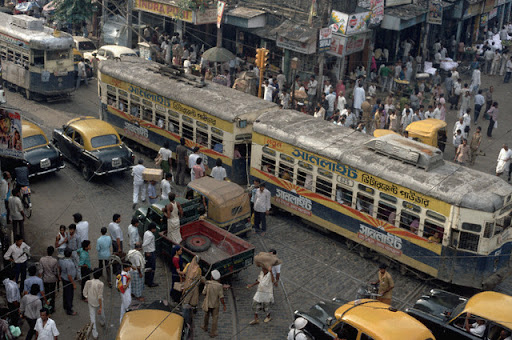
You'll regret it. The sea of humanity spilling onto the road will never end, and will probably engulf your car.
I'm fairly new to driving, so this is what I've noticed over a month or so. I will likely come across more heart-attack inducing scenarios, and I will add to this list as and when threats to my well-being on the roads make themselves felt.
1. Watch out for cows.

Cows don't give a shit about traffic rules. Cows go wherever the urge to graze takes them, even if it takes them right in front of your car.
2. Don't trust traffic lights.
They sometimes decide to screw with motorists, and not work. Mostly, it's red for 'stop'.. yellow for 'slow down'.. and no light at all for 'go'. Green lights seem to be more temperamental than the others.
3. Steer clear of tractors/trucks.
Often, they carry cargo like.. sand, or mud, or massive rocks. They have no reliable mechanism for keeping the cargo inside the truck, so if you travel too close behind, you might be rewarded with a boulder on your windshield.
4. Don't overtake from the left.. but beware of those who do.
Always check to your left before changing lanes. You won't expect that unnervingly silent scooter to zoom out of nowhere, but it will.
5. Watch out for autos filled with people.
You might not think this is a real concern.. but it is. Steer clear, because if you don't, you might run into an arm or a leg that's sticking out of one of these over-filled vehicles. Also, these clown-car-esque vehicles tend to be unresponsive to repeated beeping. So if they're drifting slowly towards you, it's probably because someone's rear end is pushed against the wheel, and the driver has little to no control over directionality.
6. Be wary of pedestrians.
Due to the lack of zebra/pedestrian crossings (and motorists' complete inability to actually stop at a zebra crossing), you'll find people darting out to and fro from various hidden avenues to cross the road. Right in front of your car. And sometimes they won't even run the whole way, sometimes they get shaken, and kind of hesitate.. RIGHT IN YOUR PATH. It's extremely unsettling. Keep a foot on the brake at all times.
7. Don't stop at zebra crossings.
You'll regret it. The sea of humanity spilling onto the road will never end, and will probably engulf your car.
I'm fairly new to driving, so this is what I've noticed over a month or so. I will likely come across more heart-attack inducing scenarios, and I will add to this list as and when threats to my well-being on the roads make themselves felt.
Wednesday, January 5, 2011
Freedom of expression violated in Pakistan.
http://timesofindia.indiatimes.com/world/pakistan/Pakistan-Punjab-governor-Salman-Tasser-killed-by-his-guard/articleshow/7216684.cms
I fear for Pakistan's future. I fear for the people in that country who can't leave if things go bad, who don't support the path to theocracy.
The article talks about how a Pakistani government official was assassinated for opposing the continuation of blasphemy laws in the country.
Now, upon researching the subject, I found that India too has blasphemy laws, albeit with a 'malicious intent' clause (which is sometimes misused according to one's interpretation of their religion).
India's blasphemy laws apply to all religions. While this is still hopelessly, backwardly deferent to religious sensibilities (as opposed to any other sensibility), at the very least, it is equal-opportunity deference. Pakistan's blasphemy laws apply only to Islam. Defilement of the Quran, for example, carries a sentence of life imprisonment. Defamation of Muhammed carries a death sentence. These are the harshest penalties imposed for blasphemy anywhere in the world, bar maybe Afghanistan.
The problem with such laws is that they;
a) Restrict freedom of expression. Criticisms of everything should be allowed in any healthy society. Why should one facet of life (religion) take precedence over all others? Why should people be so offended if somebody wishes to criticise their religion? We don't prohibit people legally from insulting our mothers, even though we love our mothers very much, do we? We don't prohibit people legally from insulting our offspring, or blood-relatives of any kind, or spouses.
Why does religion get a pass for this kind of criticism?
b) Are often used to silence and oppress minorities. Some people just don't believe in your god. It's not a crime. Why should they respect something they do not believe in, just as much as a believer does?
I am a firm believer in evolution. Do I insist that everybody must refrain from criticising or 'defaming' evolution? On the contrary, I'm interested to hear criticisms of evolution, interested in alternate theories if they hold merit.
The punishment should fit the crime, and offence has never been a good reason for legislation.
I fear for Pakistan's future. I fear for the people in that country who can't leave if things go bad, who don't support the path to theocracy.
The article talks about how a Pakistani government official was assassinated for opposing the continuation of blasphemy laws in the country.
Now, upon researching the subject, I found that India too has blasphemy laws, albeit with a 'malicious intent' clause (which is sometimes misused according to one's interpretation of their religion).
India's blasphemy laws apply to all religions. While this is still hopelessly, backwardly deferent to religious sensibilities (as opposed to any other sensibility), at the very least, it is equal-opportunity deference. Pakistan's blasphemy laws apply only to Islam. Defilement of the Quran, for example, carries a sentence of life imprisonment. Defamation of Muhammed carries a death sentence. These are the harshest penalties imposed for blasphemy anywhere in the world, bar maybe Afghanistan.
The problem with such laws is that they;
a) Restrict freedom of expression. Criticisms of everything should be allowed in any healthy society. Why should one facet of life (religion) take precedence over all others? Why should people be so offended if somebody wishes to criticise their religion? We don't prohibit people legally from insulting our mothers, even though we love our mothers very much, do we? We don't prohibit people legally from insulting our offspring, or blood-relatives of any kind, or spouses.
Why does religion get a pass for this kind of criticism?
b) Are often used to silence and oppress minorities. Some people just don't believe in your god. It's not a crime. Why should they respect something they do not believe in, just as much as a believer does?
I am a firm believer in evolution. Do I insist that everybody must refrain from criticising or 'defaming' evolution? On the contrary, I'm interested to hear criticisms of evolution, interested in alternate theories if they hold merit.
The punishment should fit the crime, and offence has never been a good reason for legislation.
Subscribe to:
Comments (Atom)